
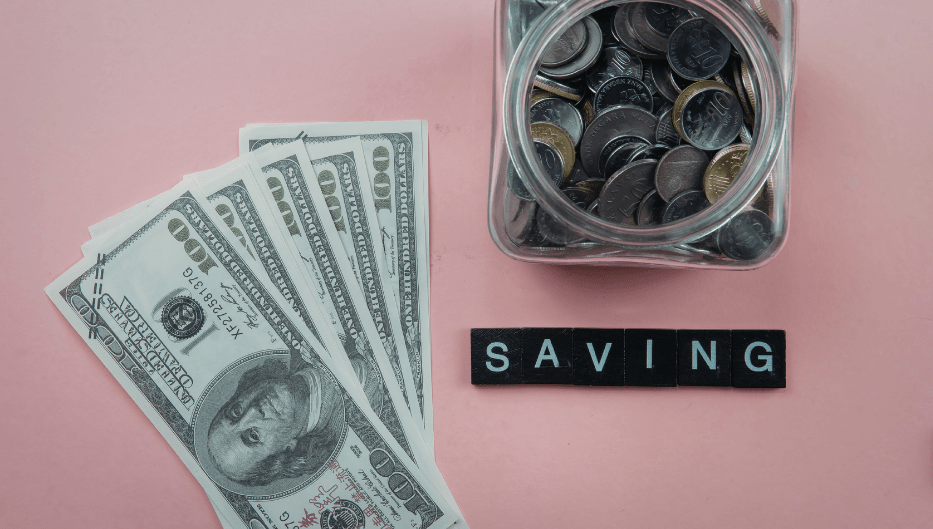
I finally sat down to write an article about money. Here we will not talk about how to become rich, but how to discover the true value of the income we already have. Therefore, if you do not have a fixed source of income, visit a training or employment site.
Why am I sharing this article on a fun blog? Because to have fun, you need money. Traveling across the continent is generally expensive for two reasons: the expensive plane ticket and the long travel time. For this reason, such trips require time to research, save and plan. The purpose of this article is to share some of my saving methods, accumulated since my years at the Faculty of Economics until today. I hope you save for your dream trips or for whatever your heart wants.
Saving, for many people, seems like something in vain. This belief takes root in the amount of money they receive regularly. But let me clarify something here: if you have the money to pay off an overdraft or “holiday loan” installment for the next 1–3 years, you have enough money to save. Think of saving as a reverse loan, where you set the liquidity conditions.
1. Once and for all*
Let’s start from the basics. In Albania, second-tier banks now offer automatic monthly transfers between accounts. Transfers are usually fixed monthly amounts. In this amount, you can include all your monthly savings. By removing access to your debit card, and seeing the net amount in your current account, you will find it somewhat easier not to be tempted. However, it also takes willpower not to touch your savings account for trivial reasons.
Now the question remains on how to calculate the amount we can save. The formula that banks usually follow for loans is: 40% of the income goes for the loan installment and 60% for living expenses. Therefore, 40% we can say that is the maximum value of our savings and we are setting the minimum at 5%.
Savings need a goal, even if the goal is simple. Why are we setting this money aside? Maybe for nothing, maybe we want to visit Africa, maybe we want a new bike, or just to have some emergency money. Whatever the answer is, it will help you decide how much money you can afford, or are willing to sacrifice at this moment, for that goal you have set.
We must be realistic with our expectations and also calculate the duration of achieving the goal. Let’s assume that you are planning a trip worth 3000 Euro. If you save 50 Euro per month for this trip, you will be able to realize it in 5 years. Now weigh the situation: is it okay for you to wait 5 years, or can you increase the amount to 100 Euro and bring the trip closer by 2.5 years? If neither applies, you should reconsider your goal to meet your standards or find an additional source of income.
The amount of savings for each of us would look completely different. For someone it might look like this: 10% Health Fund and for someone else like this 10% New Phone +15% Vacation 2026 + 15% No Reason. The important thing is to start from somewhere, even if it’s only 5% per month.
For such a service, you usually only need to visit a bank branch the first time to set it up, then the set amount is automatically transferred every month on the specified date. The transfer is made in this way: two accounts within the same bank. One is savings and the other is current or salary. Regular monthly income comes to the current account.
5 business days after the last date that the monthly money is supposed to come, I set up an automatic transfer of the total amount of savings to the savings account. This amount does not change more often than once a year for me.
*If your regular income is annual, then this formula cannot be applied to you.
2. “Buy 3”
Another approach that has helped me save is to reconsider non-essential purchases, whether they are large or small. If I have the idea of buying something that I don’t really need, I set aside the amount of money that it costs. I transfer it to the savings account, or put it in a savings box.
There is also another case when we really miss something and we need something new. If you want to buy that product or service that you are missing, look at your financial situation: would you be able to buy this product 3 times at this moment and your financial conditions would not be affected? If the answer is “no”, then this product or service is beyond your budget and you should reconsider your decision.
If it’s not something really important, you don’t have to force yourself. Take the price value of the product and put it aside. Maybe after 2–3 months the conditions may be ready to buy it, or maybe you’ve completely forgotten that you wanted such a thing. To manage shopping dilemmas, check out also “5 Questions to Ask Before You Buy Anything”.
3. Saving comes first
The last formula is also the most radical, which has generally helped me get out of difficult financial periods: consume after you’ve saved. In this case, the savings are supposed to exceed 40% of income. Such formulas are not meant for long periods, because they are too restrictive for a good quality of life. However they are very useful at the moment when we need a certain amount of money for something specific and big.
Let’s say we want to buy a new car. If we have half of our money saved in other ways, we can save the rest for a shorter period of time if we save most of our monthly income and live a very simple life. In these cases, no purchases are supposed to be made that are not “essential”.
What I mean by “essential”: home-cooked meals, utilities, housing, 1-2 coffees, and 1-2 drinks on the weekend. During this month, you will have your household shopping budget set aside, your fixed monthly payments, and a fixed daily budget for spending, e.g. 2 Euro during the week and 10 Euro on the weekend. Any money beyond that is put aside.
Finally, don’t see saving as a punishment or as “giving up on life”. See it as a way to give yourself freedom: the freedom to say “yes” to things that truly fill your heart. Even 5% a month changes your mindset, and usually, your mindset changes your reality.
Food for thought: How many hours of work did your last shopping cart cost?
I have been using this method for over 10 years. Take the price of an item you want, or items if they are in the 9.99 category, and turn it into working hours. How many hours of your life would you sacrifice to make the purchase? Is it worth it? They are not just working hours, but life. Moments when you were not with your family, you were not with friends, you were not doing something for your own pleasure.
If it is not a need, but a whim, the answer is: no, it is not worth it.